

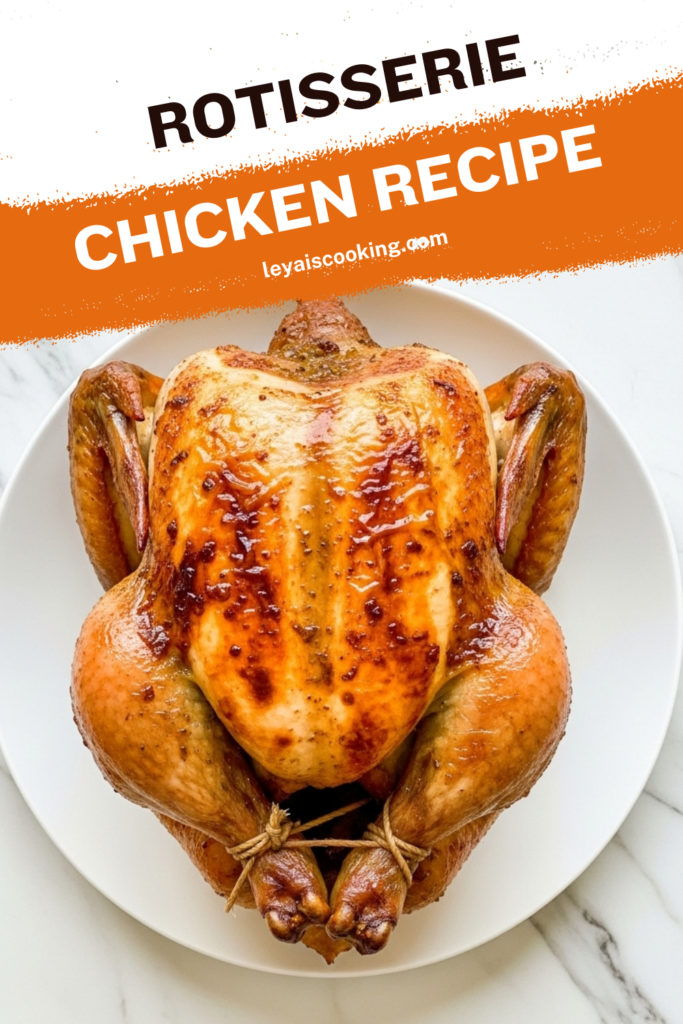
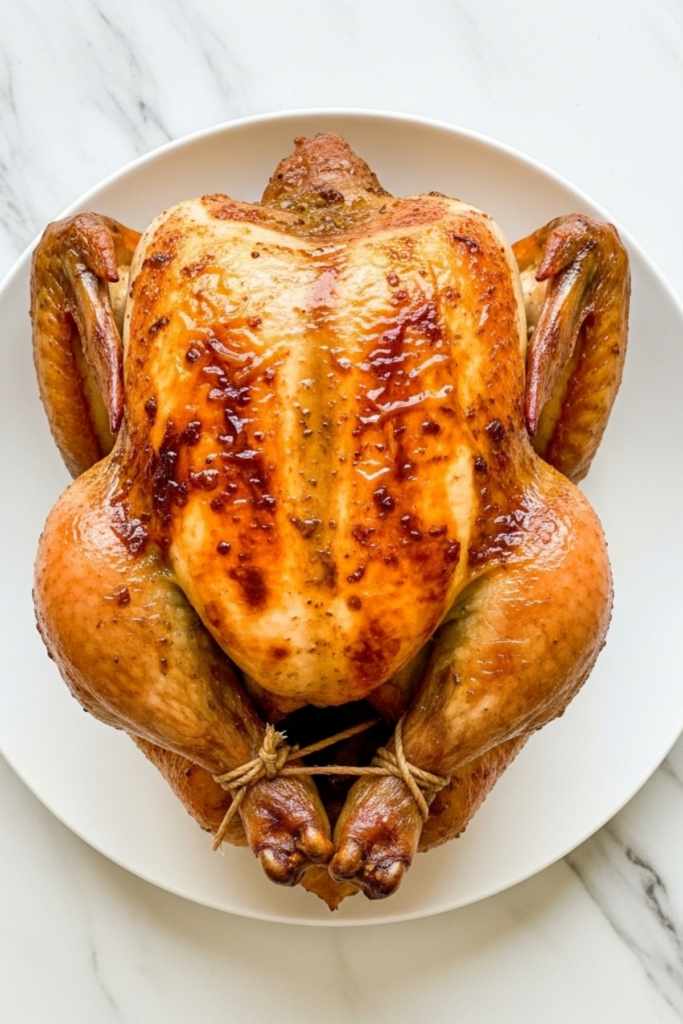
Rotisserie chicken has a quiet magic to it.
That slow spin, the golden skin, the way the aroma sneaks into every corner of the house.
I’m Leya, and this is the method I keep coming back to when I want a chicken that feels special, yet easy.
It’s juicy. It’s deeply flavored. And yes, the skin crackles just right.
This isn’t about fancy tricks.
It’s about a few smart steps that turn a simple bird into something unforgettable.
Why This Method Works?
Dry-brining seasons the meat all the way through.
It also pulls moisture from the skin, helping it turn thin and crisp instead of rubbery.
Small holes let the fat drip out slowly, basting the chicken as it spins.
That fat is flavor, and it deserves to travel.
A quick butter brush speeds up browning.
High heat brings that deep, bronzed finish we all chase.
Ingredients Needed for the Recipe
- Whole chicken (about 4 pounds) — the main star, tender and juicy when cooked right
- Kosher salt — seasons the meat and helps dry the skin
- Unsalted butter — brushed on for faster browning and rich flavor
- Butcher twine — keeps the bird tight and evenly cooked
- Bamboo skewer or metal pick — pokes small holes for fat to escape
- Charcoal — provides steady, high heat for beautiful roasting
Flavor Variations You Can Try
Sometimes I keep it plain and perfect.
Other times, I like to play.
A little smoked paprika mixed into the salt adds warmth.
Lemon zest tucked into the cavity brightens everything.
Crushed garlic rubbed on the skin brings gentle boldness.
Fresh herbs tied with the twine whisper aroma as it spins.
How to make Rotisserie Chicken Recipe?
Step 1 – Dry and Salt the Chicken
Pat the chicken completely dry with paper towels.
Sprinkle kosher salt all over, inside and out.
Set it on a wire rack over a tray.
Place it uncovered in the refrigerator overnight.
Step 2 – Poke, Truss, and Skewer
Use a skewer to poke small holes across the skin.
Focus on the thighs and fatty spots.
Tuck the wings under the body.
Truss the legs with butcher twine.
Slide the spit through the cavity and secure it.
Step 3 – Build the Fire
Light one full chimney of charcoal.
When ashy and hot, split the coals into two piles.
Place them on either side of the grill.
Set a foil pan between them to catch drippings.
Add a bit more charcoal to boost heat.
Step 4 – Butter and Start Rotating
Brush the chicken generously with melted butter.
Place it on the rotisserie over indirect heat.
Cover the grill and let it spin.
Watch the skin slowly change color.
Step 5 – Roast to Golden Perfection
Cook at medium-high heat.
Let the skin brown deeply.
Rotate for 30 to 45 minutes.
The breast should reach 155 to 160°F.
The thighs will be even juicier.
Step 6 – Rest and Carve
Remove the chicken from the grill.
Let it rest for 10 minutes.
Slide off the spit.
Carve and serve while warm.
Serving Ideas
This chicken shines on its own.
But it also loves good company.
Serve with roasted potatoes and garlic butter.
Pair with fresh salad and crusty bread.
Pull leftovers into tacos or wraps.
Or shred for soups and rice bowls.
Tips
- Always dry the chicken well before salting
- Let it air-dry overnight for the crispiest skin
- Poke enough holes so fat can escape evenly
- Use high heat for deeper color
- Brush butter only once, at the start
- Rest the chicken before carving
- Save drippings for gravy or sauces
Storage and Leftovers
Store leftover chicken in an airtight container.
Keep it refrigerated for up to four days.
Reheat gently in a covered pan.
Or enjoy cold in sandwiches.
The flavor stays kind and generous.
Even on day three.
This rotisserie chicken recipe is my quiet favorite.
It never asks for too much.
Yet it gives back so much flavor.
And that crispy skin?
I always steal a piece first.
No regrets.
Rotisserie Chicken Recipe
This rotisserie chicken recipe delivers juicy, flavorful meat wrapped in irresistibly crisp, golden-brown skin. Developed through careful testing and refinement, it uses a dry-brine method, strategic poking of fat pockets, and high-heat charcoal grilling to maximize flavor and texture. Ideal for weekend grilling or any time you crave restaurant-quality roast chicken at home.
ingredients
Instructions
-
Pat the chicken dry thoroughly with paper towels. Sprinkle kosher salt evenly over the entire surface and inside the cavity.
-
Place the chicken on a wire rack set over a rimmed baking sheet and refrigerate uncovered overnight (at least 8 hours) to dry-brine and air-dry the skin.
-
Using a metal skewer or bamboo skewer, poke small holes all over the chicken—especially in fatty areas like thighs—to help fat render and baste the skin during cooking.
-
Tuck the wings underneath the bird and tie the legs together with butcher’s twine. Secure the chicken onto the rotisserie spit with forks.
-
Light one full chimney of charcoal. Once ashed over, arrange coals on both sides of the grill grate. Place a foil drip pan in the center. Add an extra ¼–⅓ chimney of lit charcoal to each side for higher heat (target 425–450°F / 220–230°C).
-
Brush the chicken all over with melted butter. Mount the spit on the grill, cover, and cook until the skin is deep golden brown and an instant-read thermometer inserted into the thickest part of the breast reads 155–160°F (68–71°C), about 30–45 minutes.
-
Remove from the grill and let rest for 10 minutes before removing from the spit and carving.
Nutrition Facts
Servings 4
Serving Size 1/4 chicken
- Amount Per Serving
- Calories 380kcal
- % Daily Value *
- Total Fat 23gg36%
- Saturated Fat 6gg30%
- Trans Fat 0gg
- Cholesterol 125mgmg42%
- Sodium 620mgmg26%
- Potassium 380mgmg11%
- Total Carbohydrate 1gg1%
- Dietary Fiber 0gg0%
- Sugars 0gg
- Protein 42gg84%
- Calcium 20 mg
- Iron 2 mg
* Percent Daily Values are based on a 2,000 calorie diet. Your daily value may be higher or lower depending on your calorie needs.
Note
- For extra-crispy skin: Ensure the chicken is fully dry before grilling—overnight air drying is key.
- No rotisserie? You can adapt this method for oven roasting at 425°F (220°C) on a rack over a baking sheet.
- Flavor boost: Add black pepper, garlic powder, or paprika to the salt for a seasoned dry brine.
- Leftovers: Use leftover meat in salads, tacos, or enchiladas—the skin is best eaten fresh!