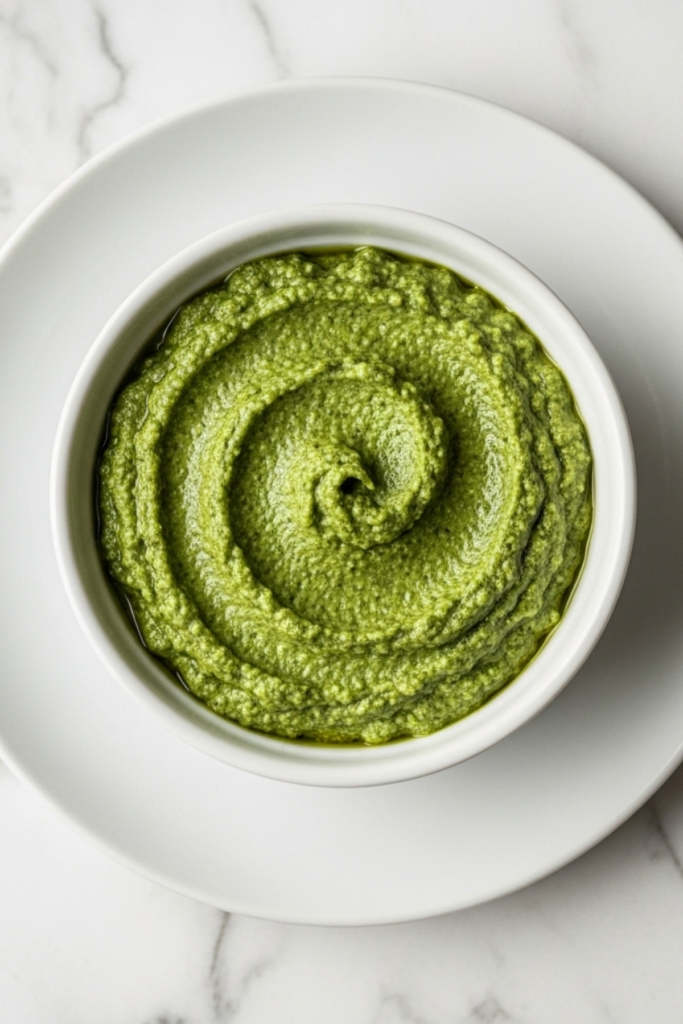
This easy vegan pesto recipe is a total breeze to make, and I promise, it's every bit as bright, nutty, and delicious as the classic version you might be thinking of.
Why This Recipe Just Works?
When I make pesto at home, I almost always make this vegan version.
It has a special little secret that makes everything click into place.
Classic pesto leans on Parmesan cheese for its rich, savory depth.
Here, a splash of fresh lemon juice does that magic, perfectly balancing the olive oil and making the basil and garlic truly sing.
Ingredients Needed for the Recipe
Each ingredient here has a specific role, coming together to create that perfect texture and taste.
Fresh Basil Leaves: The star of the show, providing that iconic, aromatic herbal foundation.
Toasted Pine Nuts or Pepitas: They add a crucial nutty richness and help create the pesto’s lush body.
Extra-Virgin Olive Oil: This brings everything together into a sauce, lending fruity depth and silkiness.
Fresh Lemon Juice: The bright, acidic counterpoint that balances the oil and makes flavors pop.
A Small Garlic Clove: It offers a sharp, pungent kick that defines pesto’s character.
Sea Salt & Black Pepper: These essentials season and enhance all the other flavors in the bowl.
The Art of Building Flavor Without Cheese
Leaving out the cheese isn't about subtraction, it's about a clever shift in focus.
The lemon juice becomes your best friend, cutting through the oil's richness beautifully.
And toasting your nuts or seeds, that's non-negotiable for me.
It wakes up their oils, releases their fragrance, and gives the whole pesto a deeper, more rounded personality.
How to make Vegan Pesto?
"Make this recipe yours—just save it to your Pinterest!"
Step 1: Start With the Base
In your food processor, combine the toasted nuts, lemon juice, garlic clove, salt, and a few cracks of pepper.
Pulse this several times until it’s all roughly but evenly chopped, which creates a flavorful paste for everything else to cling to.
Step 2: Bring in the Basil
Pile in all those fresh, fragrant basil leaves.
Pulse again, just until the basil is incorporated and broken down into the nutty base—you want it vibrant, not pulverized into oblivion.
Step 3: Emulsify With Oil
Now, with the processor running, slowly drizzle in that stream of extra-virgin olive oil.
This gradual addition helps the sauce emulsify, turning it into a cohesive, slightly creamy pesto right before your eyes.
Step 4: Taste and Customize
This is your moment to make it yours. Give it a taste.
Want it cheesier? Add a tablespoon of nutritional yeast. Craving something briny? Try two teaspoons of capers.
For a rich, umami punch, blend in a couple of oil-packed sun-dried tomatoes.
Tips
Toasting your nuts or seeds is quick and easy—just a few minutes in a dry skillet until fragrant. It makes a world of difference.
If your pesto seems too thick for your liking, don't hesitate. A little more olive oil drizzled in will smooth it right out.
For the brightest green color and freshest taste, try to make your pesto just an hour or two before you plan to use it.
Delicious Variations to Try
The basic formula is wonderfully forgiving and loves to play dress-up.
When basil isn't overflowing on your counter, other greens step up beautifully.
Try swapping half the basil for peppery arugula, hearty kale, or even fresh spinach for a milder twist.
And the nuts? They’re completely interchangeable based on what you have.
Buttery pine nuts are classic, but walnuts add earthiness, cashews bring creaminess, and sunflower seeds keep things nut-free.
Serving Ideas That Go Beyond Pasta
Of course, it's heavenly tossed with hot pasta, but its potential stretches far further.
Dollop it onto a crispy pizza fresh from the oven, or swirl it into a simple carrot ginger soup for a flavor boost.
Thin it with a bit more oil and lemon juice, and suddenly you have a spectacular salad dressing.
It’s also a magnificent companion to roasted vegetables, a vibrant topping for grain bowls, or a delicious dip for crusty bread.
How to Store Your Fresh Pesto?
To keep that vibrant flavor and color, storage is key.
Transfer your pesto to a jar or container and press a piece of plastic wrap directly onto its surface.
This simple step minimizes air exposure, which is the enemy of fresh herbs.
Pour a very thin layer of olive oil on top before sealing the lid—it acts as a protective barrier.
Stored like this in the fridge, it will stay delicious for about a week, ready to elevate any meal.
No Parmesan? No problem! This easy vegan pesto recipe is a breeze to make, and it's every bit as bright, nutty, and delicious as the traditional version. Made with fresh basil, garlic, lemon juice, pine nuts (or pepitas), and extra-virgin olive oil, it’s dairy-free, plant-based, and bursting with flavor. Perfect for pasta, pizza, salads, grain bowls, and more!
ingredients
Basic Vegan Pesto
½cup toasted pine nuts or pepitas (pepitas for nut-free option)
2tablespoons fresh lemon juice
1small garlic clove
¼teaspoon sea salt
freshly ground black pepper (to taste)
2cups fresh basil leaves (loosely packed (~1.5–2 oz by weight))
¼cup extra-virgin olive oil (plus more for smoother consistency)
In a food processor, combine the pine nuts (or pepitas), lemon juice, garlic, salt, and pepper. Pulse until finely chopped.
2
Add the fresh basil leaves and pulse until well combined but still slightly textured.
3
With the food processor running, slowly drizzle in the olive oil until the mixture is smooth or reaches your desired consistency.
4
If using, add nutritional yeast, capers, or sun-dried tomatoes. Pulse briefly to combine. Taste and adjust seasoning as needed. For a smoother pesto, add a bit more olive oil.
Nutrition Facts
Servings 4
Serving Size 2 tablespoons
Amount Per Serving
Calories240kcal
% Daily Value *
Total Fat23g36%
Saturated Fat3.5g18%
Sodium180mg8%
Potassium120mg4%
Total Carbohydrate6g2%
Dietary Fiber2g8%
Sugars1g
Protein5g10%
Calcium 60 mg
Iron 1.8 mg
* Percent Daily Values are based on a 2,000 calorie diet. Your daily value may be higher or lower depending on your calorie needs.
Note
Storage: Store in an airtight container in the fridge for up to 5 days. To prevent browning, cover the surface with a thin layer of olive oil or plastic wrap.
Freezing: Freeze in ice cube trays for up to 3 months—perfect for single servings!
Variations: Swap basil for arugula, kale, spinach, or parsley. Use walnuts, almonds, or sunflower seeds instead of pine nuts.
Allergy-friendly: Pepitas make this recipe nut-free; omit nutritional yeast if avoiding fortified ingredients.
Pin this recipe to share with your friends and followers.
Christopher Nolan
Food and Lifestyle Blogger
Hi, I'm Samantha, a full-time food blogger, mother of 2 beautiful daughters and a lovely wife. I live in New Jersey with my family. Loves traveling, sharing new recipes, and spending time with my family.